
Mob Army
Highcore Labs LLCAction
4.447.00 Reviews
- Version
- 0.5.2
- Installs
- 10.00K
- Age Rating
- Everyone
Screenshots
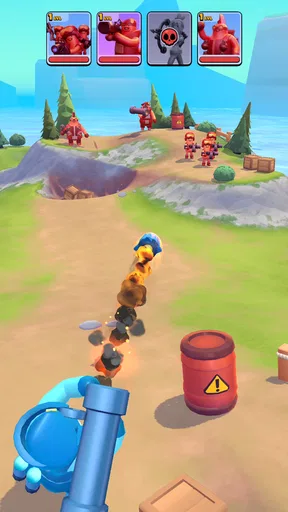
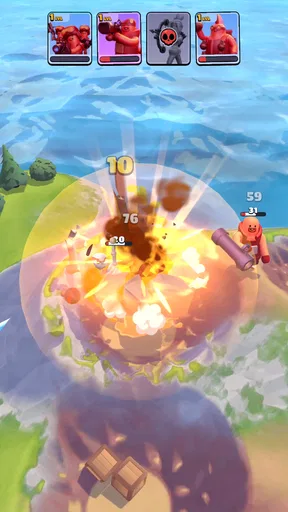
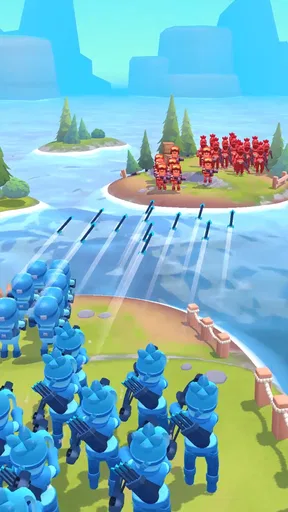
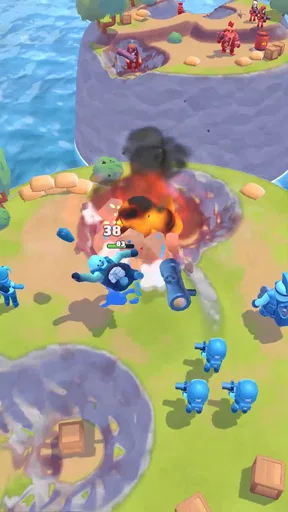
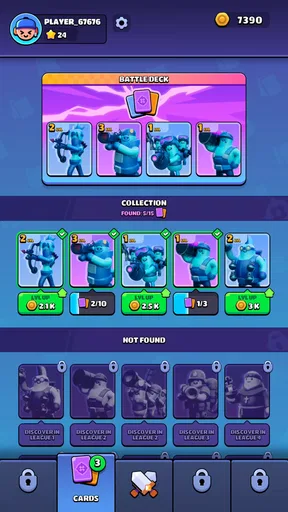

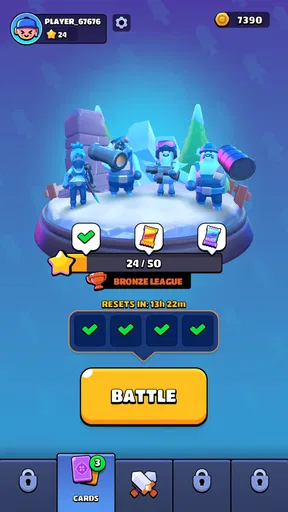
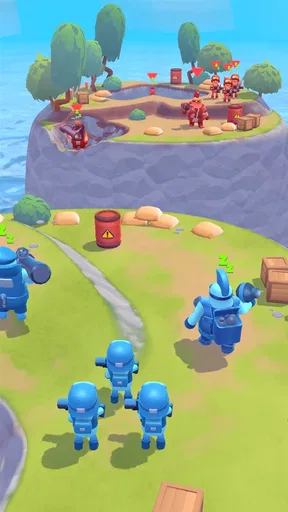
Our Review of Mob Army
 Analysis by Appyee
Mob Army is the kind of action game I can open when I want a quick competitive match rather than a long campaign or a complicated role-playing system. Its central idea is simple: two players face each other in a 1v1 battle, and the appeal comes from making better decisions under pressure. I found that straightforward focus refreshing, especially compared with mobile games that bury the actual play beneath menus, missions, and long tutorials.
Developed by Highcore Labs LLC, the game is free to download and aimed at Everyone, which makes it easy to try without committing money first. It was released on January 12, 2026, and version 0.5.2 is the build I considered here. The store page shows a 4.4 average from around 275 ratings, with over 10K installs, so it already has a small but visible audience for a relatively young release.
How Mob Army turns a simple battle into a repeatable goal
The first useful question is not whether the game has a huge amount of content. It is whether each match gives me a reason to play another one. Mob Army works best when I treat every 1v1 encounter as a short test of judgment. I am not simply tapping through an automatic sequence; I am watching the opposing army, deciding when to commit, and trying to turn a small advantage into a winning position.
That creates an early goal that is more practical than chasing a distant collection milestone: understand why I lost the previous battle. In a competitive game, this matters. If I immediately blame luck or the opponent, I do not improve. If I look at the moment when my army became vulnerable, the next match has a clear purpose. I might play more patiently, avoid wasting an attack, or hold back until the opposing side exposes an opening.
I especially like this kind of goal because it does not require a long session. A player can approach the game in short bursts, using one match to test an idea rather than feeling obliged to complete a large daily routine. That makes it suitable for a commute, a waiting room, or a brief break when I want interaction instead of passive scrolling.
At the same time, the simplicity can feel limiting if I expect a broad single-player adventure. This is not the right choice for someone looking for a story campaign, exploration, or a large world to uncover. The focus is competitive replayability, so the motivation comes from playing better and progressing through the available experience, not from discovering a scripted narrative.
What I look for after the first few battles
Early matches are most useful when I pay attention to the relationship between my decisions and the result. I try not to change everything at once. If I alter my timing, positioning, and spending choices together, I cannot tell what actually helped. A better routine is to choose one adjustment, test it in the next battle, and keep the change only if it produces a clearer advantage.
This is one of the less obvious strengths of a compact 1v1 format: it gives mistakes a readable shape. In a crowded multiplayer match, losing can be difficult to interpret because several players and objectives affect the outcome. Here, the direct confrontation makes personal responsibility more visible. That can be satisfying for thoughtful players, although it can also make a defeat feel more personal when the opponent consistently reads my plan.
I would not recommend spending immediately on in-app purchases just to solve an early losing streak. Mob Army is free to play, while its optional items range from $0.99 to $99.99 each. That is a very wide price range, so I would first learn the battle flow and decide whether I genuinely enjoy the core loop. Buying before understanding the game risks paying for progress without knowing whether the underlying competition suits me.
How progress feels when the game gives me a signal
Progress in a competitive action game is not only about visible unlocks. I also measure it through better choices. The first time I recognize an opponent’s pattern, recover from an early setback, or win by waiting instead of rushing, I feel a meaningful improvement even if the game does not celebrate it with a dramatic reward. That personal progress is important in Mob Army because the 1v1 structure naturally turns each match into feedback.
Still, a player needs clear signals to stay motivated over time. I want to know whether I am becoming stronger, merely facing different opponents, or simply repeating the same encounter. The game is most engaging when its progression gives my victories a sense of direction. If the available goals become too vague, the matches can start to feel interchangeable, particularly for players who prefer concrete unlocks and a clearly marked path.
My advice is to create a small personal record while learning. After a match, note one decision that worked and one that failed. This takes less than a minute, but it prevents the common mobile-game habit of replaying on autopilot. It also helps separate genuine improvement from a lucky result. A single win does not prove a strategy is reliable; a pattern across several battles is more useful.
Another practical tip is to judge progress by consistency rather than by your best performance. A spectacular victory can be exciting, but repeatable results matter more in 1v1 play. If I can explain why a tactic worked and reproduce it against a different opponent, I have gained something valuable. If I cannot, I treat that victory as information rather than proof that my approach is complete.
The challenge curve and the cost of impatience
The challenge in Mob Army comes from direct competition, so difficulty is not only controlled by the game itself. It also depends on the person on the other side. That makes the curve less predictable than a traditional action game with fixed stages. One match may feel comfortable, while the next exposes a weakness I had not noticed. I see that uncertainty as part of the appeal, but it can be frustrating when I want a smooth, carefully paced climb.
Because the opponent can punish obvious habits, rushing is rarely a good default. I found it more useful to treat the opening as an information-gathering phase. Rather than immediately spending every available option, I watch how the other player responds. Do they attack quickly? Do they wait for me to commit? Do they repeat the same pattern after gaining a small lead? These observations help me choose a response instead of acting on instinct.
This approach also reveals a trade-off in the design. A patient player may enjoy the mental contest, while someone who wants constant action can find the waiting and reading phase slow. The game’s competitive identity depends on that tension. If every decision were obvious, matches would become a race to tap first. If every move were too cautious, the experience would lose energy. Mob Army is at its best when I am making deliberate choices without feeling that the battle has stalled.
When a match becomes difficult, I try one controlled change before deciding that the game is unfair. I may alter when I attack, protect a vulnerable part of my army, or stop chasing a temporary advantage. If the same problem continues, that tells me more than a single frustrating loss. It may mean I have reached a genuine skill barrier, or it may mean the progression path expects a different approach than the one I prefer.
Where retention helps and where it can become pressure
Competitive games naturally encourage repeated play because every defeat creates an unfinished question: can I beat that strategy next time? Mob Army benefits from this loop. The strongest reason I return is not an artificial reminder but the desire to correct a mistake while the match is still fresh in my mind. That is a healthy form of retention because it is connected to learning.
The pressure changes when progression or purchases begin to feel more important than decision-making. Since the game includes in-app purchases, players should be careful about treating spending as a shortcut through frustration. The free entry point is a positive feature, but the presence of paid items means I would set a personal limit before playing regularly. That keeps an exciting win from turning into an impulsive purchase after a bad run.
I also think session length matters. A player who keeps queuing after several losses may stop analyzing and start reacting emotionally. My own rule is to pause when I notice that I am attacking simply because I am annoyed. A short break protects the quality of play and makes the next match more informative. This is a small habit, but it is particularly useful in a game built around direct rivalry.
Mob Army should appeal to people who enjoy improvement through repetition, but it may not hold the attention of players who need constant new environments, characters, or story events. Compared with a conventional action game, it offers a narrower but more focused loop. Compared with a large strategy game, it is easier to approach but may provide less room for long-term planning. Compared with a casual arcade title, it asks me to think more carefully about another player’s behavior.
Who will enjoy it, and who should skip it
I would recommend Mob Army to players who like short competitive encounters, readable goals, and the satisfaction of turning a loss into a lesson. It is a good fit for someone who wants an action game that can be played in small sessions without requiring a full evening. It also suits players who enjoy testing decisions against a real opponent rather than repeating predictable computer-controlled stages.
I would be more cautious recommending it to someone who dislikes losing, wants a relaxed offline-style experience, or expects a deep story. The 1v1 format puts the result directly in front of me, and there is little room to hide behind a team when a decision goes wrong. Players who prefer cooperative play may also find the head-to-head focus too narrow.
Parents should find the Everyone age rating reassuring as a basic guide to suitability, although I would still explain the purchase model to younger players. Free installation does not mean every item is free, and the individual purchase range can reach $99.99. For a family device, purchase controls and a clear conversation about spending are sensible precautions.
My verdict on the progression and pacing
Mob Army succeeds when I approach it as a focused competitive test rather than a content-heavy action package. Its early goals are strongest when they come from understanding the battle, and its progress feels most rewarding when I become more consistent instead of merely collecting rewards. The difficulty is lively because opponents do not all challenge me in the same way, but that same unpredictability can make the experience uneven.
The game’s pacing depends heavily on the player’s attitude. If I pause to study mistakes, short matches can provide a satisfying learning loop. If I rush, chase losses, or expect every defeat to be fixed by a purchase, the experience becomes stressful. That is why I see the free version as a chance to test the core competition, not as a promise that every player will enjoy the long-term progression.
Highcore Labs LLC has built a compact proposition here: direct action, 1v1 rivalry, and repeated attempts to outthink the opponent. The current version, 0.5.2, is worth trying for anyone curious about that format, especially because there is no upfront price. My recommendation is to play patiently, set a spending boundary, and judge the game by whether each match teaches you something. If that learning process feels rewarding, Mob Army can become a neat competitive habit; if you need a richer campaign or a broader variety of modes, a more expansive alternative will likely be a better fit.
Verdict
Strengths of Mob Army
- Simple controls make it easy to start playing immediately.
- Short battles fit well into quick gaming sessions.
- Unit variety allows for different army combinations.
- Progression gives players goals beyond individual matches.
- Bright visuals make the battlefield easy to follow.
Limitations of Mob Army
- Later stages can feel repetitive without major gameplay changes.
- Some upgrades may require considerable time to unlock.
- Crowded battles can make individual units hard to track.
- The game may become less engaging for players seeking deep strategy.
- Performance can vary on older phones during intense battles.
Other Releases by Highcore Labs LLC
View All
Roadside Empire: Idle Tycoon
Simulation4.4
Similar Picks in This Category
View All
Temple Run 2: Endless Escape
Imangi Studios4.1

PUBG MOBILE
Level Infinite4.3

Free Fire: 9th Anniversary
GARENA INTERNATIONAL I4.4

Talking Tom: Hero Dash Run
Outfit7 Limited4.3

slither.io
Lowtech Studios3.9

Sniper 3D:Gun Shooting Games
Wildlife Studios4.6
Frequently Asked Questions
What is Mob Army, and what kind of gameplay does it offer?
Mob Army is a mobile strategy and action game centered on building, expanding, and controlling a powerful army. Players typically recruit units, improve their forces, complete missions, and face increasingly difficult opponents. The experience combines tactical decisions with progression mechanics, so success depends not only on having strong characters but also on choosing the right units, upgrades, and formation for each battle.
Is Mob Army free to download and play?
Mob Army can generally be downloaded and played without an upfront purchase, but the game may include optional in-app purchases. These purchases can provide extra resources, upgrades, premium items, or faster progression. You can usually enjoy the main gameplay without spending money, although free players may need more time and patience to unlock certain content and compete with users who invest in premium advantages.
Does Mob Army require an internet connection?
An internet connection may be required for important features such as account synchronization, online events, competitive modes, advertisements, rewards, and server-based progression. Some parts of the game may work temporarily offline, but this can vary depending on the version and device. For the most reliable experience, it is best to play while connected to a stable Wi-Fi or mobile data network.
Is Mob Army suitable for children and younger players?
Mob Army may be accessible to younger audiences, but parents should review its store rating, content descriptions, advertising, and purchase options before allowing regular play. Strategy games can include combat themes, competitive mechanics, timers, and randomized rewards. If children use the app, enabling parental controls and restricting in-app purchases is recommended to prevent accidental spending and limit exposure to unsuitable content.
What should I check before downloading Mob Army on Android or iOS?
Before downloading Mob Army, check that your device meets the listed operating system and storage requirements. Keeping enough free space is important because updates may require additional room. You should also review the latest user ratings, permissions, privacy information, and in-app purchase details in the official store. Downloading from Google Play or the Apple App Store is the safest way to obtain the legitimate version.
Play our best games!


